
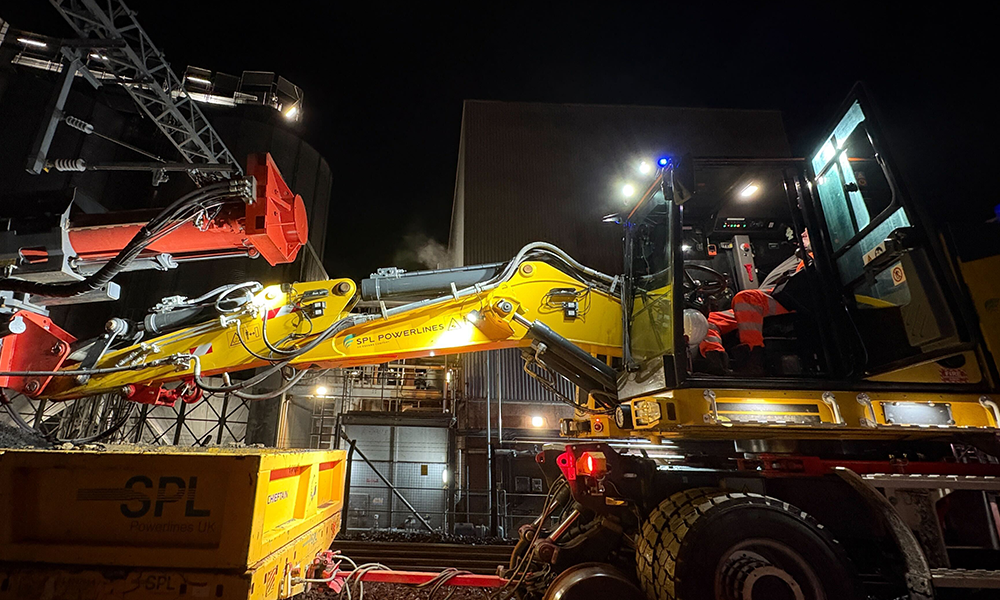



SPL Powerlines and Network Rail Scotland have partnered to be the first to deploy Tended’s Virtual Worksite Marker Boards (VWSMBs) solution in Scotland as part of the Fife Decarbonisation Programme.
This deployment marks an industry first in the region, not only as the first use of VWSMB but also the successful delivery of the very first VWSMB worksite in a T3A possession, meaning no physical boards of any kind were used.
This deployment follows a national deviation to the Rail Industry Rule Book, granted by RSSB's Traffic Operation and Management Standards Committee, to allow Tended’s VWSMBs to be used during any on-track plant only possession.
Key outcomes
This very first shift saw clear and measurable outcomes, including:
- Approximately 30-minute time saving from not needing to place and recover physical WSMBs at either end of the shift, with additional time saved by T3A.
- An additional 30 minutes were saved from not having to place and recover possession limit boards from using T3A enabled through the Initiate system.
- Two Engineering Supervisor Assistants (ESAs) were redeployed to other critical duties.
- 10 phone calls were eliminated, freeing up the Engineering Supervisor’s time.
- A 32-mile reduction in the number of miles driven to place and recover physical boards, helping to reduce the carbon emissions on this important decarbonisation project.
These are benefits that both Network Rail Scotland and SPL Powerlines can expect to see continue across worksites as they proceed with the rollout of Tended’s VWSMBs.
How VWSMB addresses the challenges with physical worksite marker boards
By replacing physical worksite marker boards (WSMBs) with VWSMBs, Tended is helping to address the challenges that come with these traditional controls. In addition to being time consuming to place, this manual task can lead to issues such as incorrect board placement or failure to remove boards after works are completed, which can result in collisions, damage, and network delays.
Accessing the infrastructure to place and recover physical boards exposes track workers to risk, which is increased if they lose situational awareness and stray onto a line still open to traffic.
Tended’s VWSMBs is designed to remove the risks and time inefficiencies associated with physical boards. Instead of using these to demarcate the edges of the worksite, organisations use geofencing to digitally map worksite limits.
A small device attached to the inside cab of on-track plant uses geospatial data to position itself against these limits. If the operator crosses a boundary, the device alerts them to let them know they’ve exceeded the bounds of the worksite.
This system means worksites can be started with the click of a button, saving significant time and increasing productivity windows. It mitigates teams’ exposure to risk by reducing the need for them to access the infrastructure. There is also no chance of physical worksite marker boards being placed incorrectly or left behind, helping to minimise disruption and project delays.
Next steps
Following these early successes, VWSMB will continue to be rolled out in Scotland. This collaborative project is a major advancement, set to deliver substantial safety, time and efficiency benefits across the entire rail industry. It marks the beginning of an industry shift towards digital worksites, with Scotland leading the way.
Our team were onsite to capture this historic deployment and we also chatted with Craig Milne, Operations Director at Network Rail Scotland and Allan Black, Delivery Director at SPL Powerlines. Watch our latest video below to learn more!

Craig Milne, Operations Director at Network Rail Scotland said: “We continually look for ways to innovate and work more efficiently without ever compromising safety. This technology helps us do exactly that, giving our teams more time on track to focus on the engineering work that matters. The results from this trial show the real value digital tools can bring to our operations and we look forward to expanding on this as we continue to deliver improvements to Scotland’s railway for our customers.”
“This deployment represents a step change in how we collectively manage safety and efficiency on the railway,” said Lee Pounder, Regional Managing Director at SPL Powerlines. “Working in close partnership with Network Rail and Tended, we have demonstrated how digital innovation can be introduced responsibly, without compromise to safety, while delivering tangible operational, commercial and sustainability benefits. Being the first principal contractor in Scotland to adopt Virtual Worksite Marker Boards is something we are extremely proud of, but more importantly it reflects a shared commitment across all parties to challenge traditional methods and continuously improve how we protect our people, our infrastructure and the wider network.”
Allan Black, Delivery Director Transport at SPL Powerlines said “As the first deployment of Virtual Worksite Marker Boards within a T3A possession in the UK, the trial marks a major national milestone in modernising possession management.Through this successful trial, SPL Powerlines has demonstrated how digital solutions can enhance site visibility, improve real‑time assurance, and support safer, more predictable engineering delivery. The company looks forward to continuing its collaboration with Network Rail to roll out innovative tools that strengthen safety and maximise productive time on track.”
Matthew Cummins, Head of Delivery at Tended said “The success of this first Virtual Worksite Marker Board deployment with SPL Powerlines and Network Rail Scotland marks an important moment for digital transformation in the rail industry. Seeing our geofencing technology deliver measurable benefits, from increasing available working time and improving efficiency to enhancing operational safety and sustainability, is incredibly rewarding. This project is setting a new standard for worksite management and I’m very excited to see this progress throughout the industry.”


